
How to Prepare for UPSC: A Practical Step-by-Step Guide for Beginners
Akshay
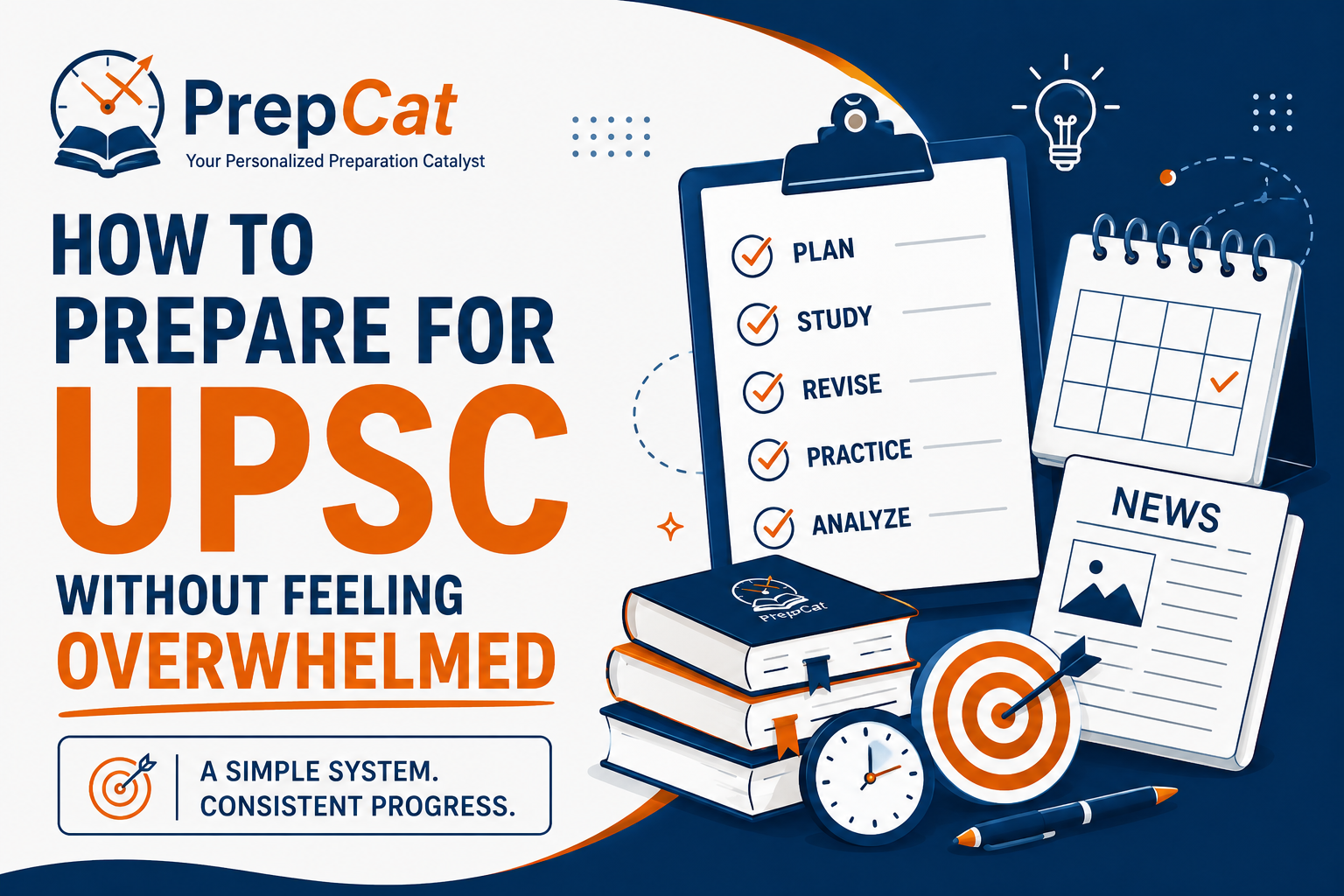
The Union Public Service Commission (UPSC) Civil Services Examination is widely regarded as one of the toughest competitive exams in India. Every year, lakhs of aspirants apply, but only a small fraction make it to the final merit list. If you are wondering how to prepare for UPSC as a beginner, the good news is that success in this exam is less about raw talent and more about the right strategy, consistent effort, and smart use of resources.
This guide breaks down the entire UPSC preparation journey into clear, practical steps. Whether you are a college student, a working professional, or someone starting from scratch with no coaching background, this step-by-step roadmap will help you understand exactly what to do, in what order, and how to avoid the common mistakes that derail most first-time aspirants.
Understanding the UPSC Exam Structure
Before jumping into preparation, it is important to understand what you are preparing for. The UPSC Civil Services Examination is conducted in three stages:
1. Preliminary Examination (Prelims): An objective-type screening test consisting of two papers General Studies Paper I and the Civil Services Aptitude Test (CSAT), which is qualifying in nature.
2. Main Examination (Mains): A descriptive, writing-intensive exam with nine papers, including an essay, four General Studies papers, two optional subject papers, and two qualifying language papers.
3. Personality Test (Interview): The final stage, where a board assesses your suitability for a career in the civil services through a structured conversation.
Step 1: Understand the Syllabus Thoroughly
The single most important document in your UPSC journey is the official syllabus. Many aspirants lose months simply because they study topics that are not relevant, or they miss areas that are frequently tested. Read the syllabus line by line and keep it visible throughout your preparation on your desk, in your notes app, or bookmarked in your study planner. A practical way to stay on top of the syllabus is to break it down into smaller, trackable units. This is where a structured syllabus tracker becomes useful, letting you mark topics as completed, partially done, or due for revision so that no portion of the vast UPSC syllabus is left unattended as the exam date approaches.
Step 2: Choose the Right Study Material
One of the biggest beginner mistakes is collecting too many books and sources. UPSC preparation rewards depth over breadth in terms of resources. It is better to revise a few reliable sources multiple times than to skim through dozens of books at once.
Static GS foundation
Static General Studies refers to topics that do not change with current events — Polity, Geography, History, Economy basics, and Science fundamentals. These form the backbone of both Prelims and Mains, and well-organised static GS notes that simplify these subjects into exam-oriented points can save enormous revision time later.
Dynamic and current affairs material
Alongside static portions, UPSC increasingly links questions to ongoing events, government schemes, and international developments. Following a daily current affairs digest and maintaining dynamic GS notes that connect news events to static syllabus topics ensures you are not caught off guard by application-based questions.
Step 3: Build a Realistic Study Strategy and Timetable
A common reason aspirants burn out is an unrealistic timetable copied from a topper's interview without adapting it to their own pace, background, and daily commitments. Instead, build a strategy based on your available preparation time whether it is 12 months, 6 months, or a longer runway of two to three years. Using a strategy-building tool that lets you input your available months and daily study hours to generate a phased plan can remove much of the guesswork from this step, especially for beginners who do not know how to sequence their preparation.
• Assess how many hours you can realistically dedicate each day, factoring in work, college, or family responsibilities.
• Divide your timeline into phases: foundation building, syllabus completion, revision, and mock-test-intensive periods.
• Set weekly and monthly targets instead of only long-term goals, so progress is measurable.
• Review and adjust the plan every few weeks based on actual progress, not just intentions.
Step 4: Start with NCERTs and Basic Books
Regardless of your educational background, NCERT textbooks from Class 6 to 12 are the recommended starting point for UPSC preparation. They explain concepts in simple language and build the conceptual clarity needed before you move to advanced or reference books. Skipping this foundation and jumping directly into voluminous standard reference books often leads to confusion and shallow understanding.
Once NCERTs are complete, move on to standard reference books for each subject but resist the urge to read every recommended book on a topic. Depth in fewer sources, revised multiple times, consistently outperforms superficial coverage of many sources.
Step 5: Make Newspaper Reading and Current Affairs a Daily Habit
Current affairs form a significant portion of both Prelims and Mains, and they also feed directly into essay writing and the interview stage. Set aside 45 minutes to an hour daily for reading a reliable newspaper, focusing on national issues, government policies, international relations, and science and technology developments rather than sensational or purely regional news.
Instead of just reading passively, make short notes under GS paper headings (Polity, Economy, Environment, Science and Technology, and so on) so that current affairs are organised in an exam-ready format rather than scattered across a notebook.
Step 6: Practise Answer Writing from Day One
Many aspirants delay answer writing until a few months before Mains, which is a critical mistake. Answer writing is a skill that improves only with regular practice, feedback, and revision. Start writing answers to previous years' questions as soon as you finish a topic, focusing on structure, relevance, and word-limit discipline rather than simply recalling facts.
Begin with 10 to 15 answers a week and gradually increase frequency as your syllabus coverage grows.
Focus on introduction, body with structured points, and a concise conclusion for every answer.
Use diagrams, flowcharts, and keywords where relevant, since presentation matters in Mains evaluation.
Get answers evaluated periodically, whether by mentors, peer groups, or a study community, to identify blind spots.
Step 7: Build a Strong Revision System
Because the UPSC syllabus is vast, information you study today can be forgotten within weeks without deliberate revision. Build a revision cycle into your weekly and monthly schedule rather than treating revision as something to be done only before the exam. Short, well-structured revision notes, the kind that condense a topic into key points, keywords, and mnemonics, are far more useful in the final months than re-reading full textbooks. Aim to revise static portions at least three to four times before Prelims, and keep current affairs notes updated on a rolling monthly basis.
Step 8: Take Mock Tests and Test Series Seriously
Mock tests serve two purposes: they test your knowledge under exam-like conditions, and they train your time management and temperament. Start taking sectional or subject-wise tests early in your preparation, and move to full-length mock tests as the exam approaches. After every mock test, spend as much time analysing your mistakes as you spent taking the test. Identify patterns are you losing marks due to conceptual gaps, careless errors, or poor time allocation? This analysis is often more valuable than the test score itself.
Step 9: Choose Your Optional Subject Wisely
The optional subject carries significant weight in the Mains examination, so choosing it should not be a last-minute decision. Base your choice on genuine interest, availability of study material, overlap with the General Studies syllabus, and your own academic background, rather than simply following what is trending among other aspirants.
Once chosen, stick with your optional subject rather than switching midway, since consistency and depth matter far more than the specific subject you pick.
Step 10: Prepare for the Personality Test (Interview)
If you clear Mains, the final stage is the interview, which assesses your awareness, judgment, and communication rather than testing rote knowledge. Preparation for this stage should include a thorough review of your Detailed Application Form (DAF), current affairs of the preceding months, and your home state or district's key issues.
Practising mock interviews, staying updated on major national and international developments, and being honest and composed in your responses matter far more than memorised answers.
Common Mistakes Beginners Should Avoid
Collecting too many books and sources instead of revising a few thoroughly.
Starting answer writing practice too late in the preparation cycle.
Ignoring the syllabus and studying topics that are rarely tested.
Ignoring revision until the last few weeks before the exam.
Comparing your timeline and strategy with other aspirants instead of building a plan suited to your own pace.
Preparing in isolation without any feedback loop, mentorship, or peer discussion.
How PrepCat Supports Your UPSC Preparation
Bringing together everything discussed above syllabus tracking, strategy building, static and dynamic notes, revision material, and a peer community into one place is exactly the gap PrepCat is built to fill. Instead of juggling scattered PDFs, random YouTube playlists, and multiple apps, aspirants can track syllabus completion, build a personalised study strategy based on their available time, access organised static and dynamic GS notes, revise through crisp revision-friendly content, and connect with fellow aspirants for discussion and motivation, all within a single platform.
Conclusion
Preparing for UPSC is a long journey that rewards discipline, smart planning, and consistent revision far more than last-minute effort. By understanding the exam structure, choosing the right study material, building a realistic timetable, practising answer writing regularly, and revising systematically, beginners can approach this exam with clarity instead of confusion. If you are just starting out and want a platform that brings your syllabus tracking, strategy planning, study notes, and aspirant community together in one place, PrepCat is designed to be that personalised preparation catalyst for your UPSC journey. Explore PrepCat's Syllabus Tracker, Strategy Maker, and Study Toolkit to give your preparation the structure it needs from day one.